What to note down for your provider
The person who answers the phone cannot see you. They work from what you tell them, so a few clear notes make the call quicker and the advice better fitted to you.
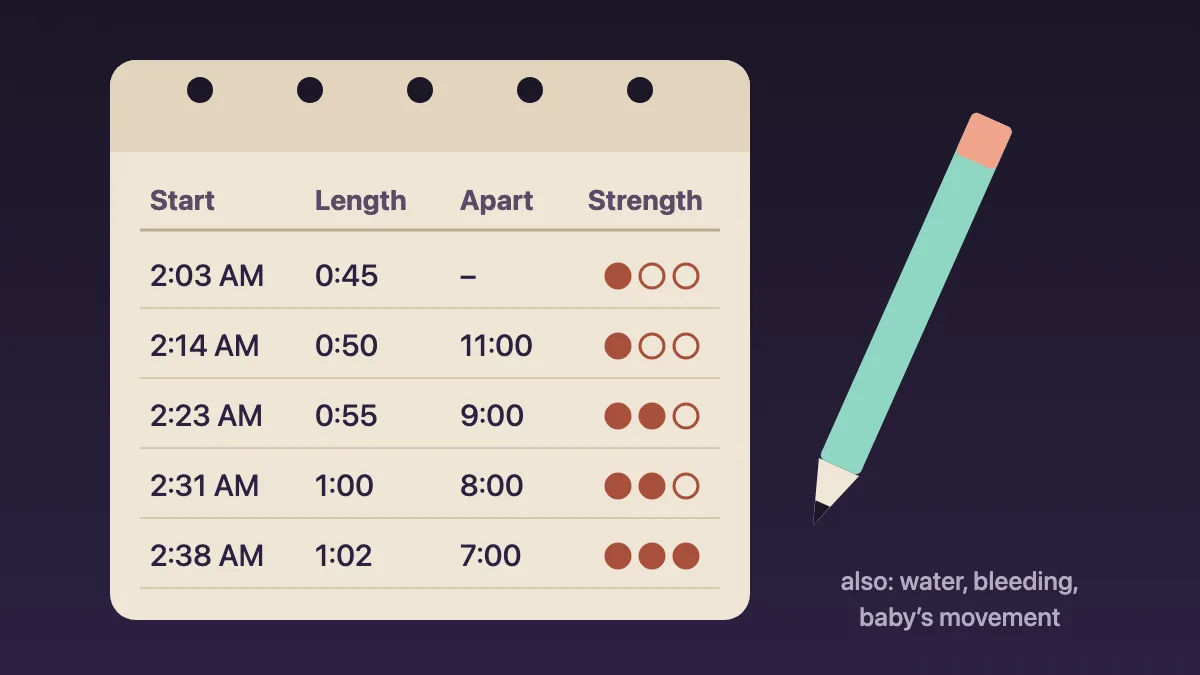
When you ring your provider’s office or the hospital labor line, you are usually asked the same handful of questions. Having the answers written down means you are not trying to remember clock times between contractions. Cleveland Clinic says that writing down the time and length of each contraction is extremely helpful for describing your pattern, and its page on false labor notes that a provider may ask you to time contractions or describe your pain before deciding whether you should come in.
This page gathers what the main patient sources say providers want to know. It is a checklist for your notes, not a way of working out the answer yourself.
About the contractions
- When they started. The clock time of the first one you noticed.
- How far apart they are. From the start of one to the start of the next, now and an hour ago, so the direction is clear. ACOG describes labor contractions as regular and getting closer together over time.
- How long each one lasts. In seconds, or minutes and seconds.
- How strong they are. Your own words are fine. A test several sources use is whether you can walk or talk through one: March of Dimes says labor contractions get so strong that you cannot.
- What changes them. ACOG suggests noting whether they continue when you rest and drink water. March of Dimes adds whether they keep going when you move around.
- Where you feel them. ACOG says pain from labor contractions usually starts in the back and moves to the front, while false labor is usually felt only in the front.
The first three are exactly what a contraction timer keeps for you. If you are not sure how the numbers are measured, see how to time contractions.
About everything else
The sources’ lists of reasons to call are a good guide to what else you will be asked. Note each of these, even if the answer is “no” or “normal”.
- Your water. Whether it has broken, at what time, and whether it was a trickle or a gush. The NHS asks people to tell their midwife immediately if the fluid is smelly or coloured, and suggests wearing a pad so its colour can be checked.
- Bleeding. How much and what colour. A small pink or slightly bloody discharge can be the mucus plug. Mayo Clinic says to contact your care team right away if bleeding is as heavy as a typical period, and March of Dimes says the same about bright red or heavy bleeding.
- Your baby’s movement. Whether it is the same as usual. ACOG and the NHS list a baby moving less, and Cleveland Clinic a noticeable change in movement, as a reason to get in touch without waiting.
- How many weeks pregnant you are. Before 37 weeks the advice is different: Mayo Clinic and the NHS say to call right away if you think labor may be starting.
- Anything your provider has already flagged. Cleveland Clinic names a planned C-section and a medical condition that needs careful monitoring. If you have been told you are positive for group B strep, say so: Cleveland Clinic notes that providers want to start antibiotics soon after the water breaks.
- How long it takes you to get there. ACOG suggests working this out before labor, with traffic in mind.
A script to read from
Fill this in and keep it by the phone. It takes under a minute to read out.
“I am ___ weeks pregnant with my ___ baby, due on ___.
My contractions started at ___. In the last hour I have had ___. They last about ___ and start about ___ apart.
They feel ___. When I rest or drink water they ___.
My water has / has not broken (at ___, it looked ___). Bleeding: ___. The baby’s movement is ___.
I am about ___ minutes from the hospital. What would you like me to do?”
Then write down what they tell you, including when they want you to call back.
What the copied log looks like
On the timer, Copy log as text puts your log on the clipboard so you can paste it into a message. It reads like this (an example with made-up times):
| Line | What it tells the reader |
|---|---|
| 1) 2:03 AM, lasted 0:45, mild | The first contraction: start time, length, and the strength you tapped. |
| 2) 2:11 AM, lasted 0:52, 8:00 after the previous start, moderate | The second started eight minutes after the first one started. |
| Last 60 minutes: 2 contractions, average length 0:49, average 8:00 apart (start to start). | A one-line summary of the past hour. |
The copied text ends with a line saying it is a personal record and not medical advice. Send it to your partner as a backup, too, in case your phone battery gives out.
Settle these before the day
ACOG lists four things to agree with your care team well before the due date. They are worth writing on the same page as your notes:
- The right time to call.
- How to reach your doctor, provider or nurse after office hours.
- Whether to call first or go directly to the hospital.
- Any special steps to take if you think labor has begun.
Cleveland Clinic suggests further questions for a prenatal visit, such as how far apart contractions should be and when you would need to start pain relief. Save the after-hours number in your phone and your partner’s, and put it on the fridge. Our page on the 5-1-1 pattern explains why the answer to “when do I call?” can differ from one person to the next.
You do not need a perfect log to call
Notes help, but nobody on a labor line expects a spreadsheet. Mayo Clinic says not to hesitate to call if you are confused about whether you are in labor. March of Dimes says to call no matter what time of day or night. Cleveland Clinic says your provider is available at any time to answer questions about whether your contractions are true labor.
If something feels wrong, that is enough of a reason. Call first and fill in the notes afterwards.
This page is a note-taking aid built from the sources below. It does not replace the questions your own provider asks. Follow the instructions your own provider gave you, and call your provider or emergency services if you are worried.
Sources
- Cleveland Clinic. Contractions (last updated August 8, 2024). Opened November 21, 2026.
- Cleveland Clinic. Prodromal Labor (last updated February 6, 2026). Opened November 21, 2026.
- ACOG (American College of Obstetricians and Gynecologists). How to Tell When Labor Begins (last reviewed November 2025). Opened November 21, 2026.
- March of Dimes. Contractions and signs of labor (last reviewed December 2025). Opened November 21, 2026.
- NHS. Signs that labour has begun (page last reviewed 9 November 2023). Opened November 21, 2026.
- Mayo Clinic. Signs of labor: Know what to expect (July 23, 2024). Opened November 21, 2026.
- Cleveland Clinic. Braxton Hicks Contractions (last updated July 8, 2025). Opened November 21, 2026.
- Cleveland Clinic Health Essentials. Baby on the Way? Here’s What You May Not Know About Labor and Delivery (June 6, 2024). Opened November 21, 2026.
Read next
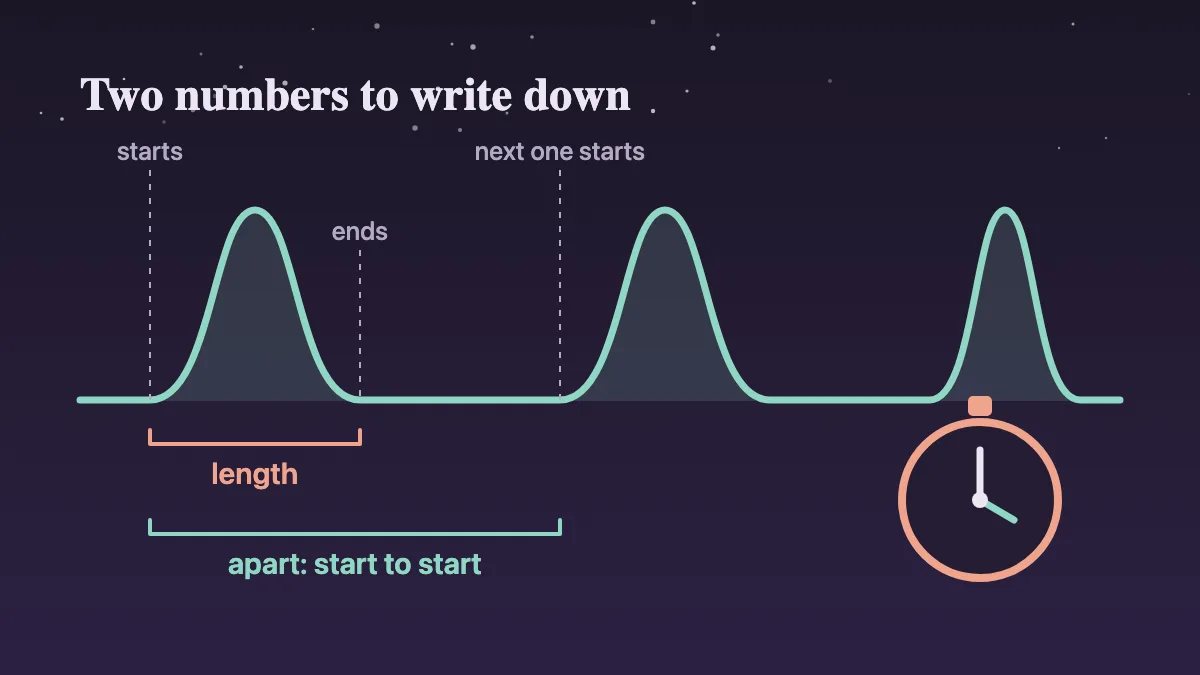
How to time contractions
The two numbers to write down, a worked example, and the mistakes that skew a log.
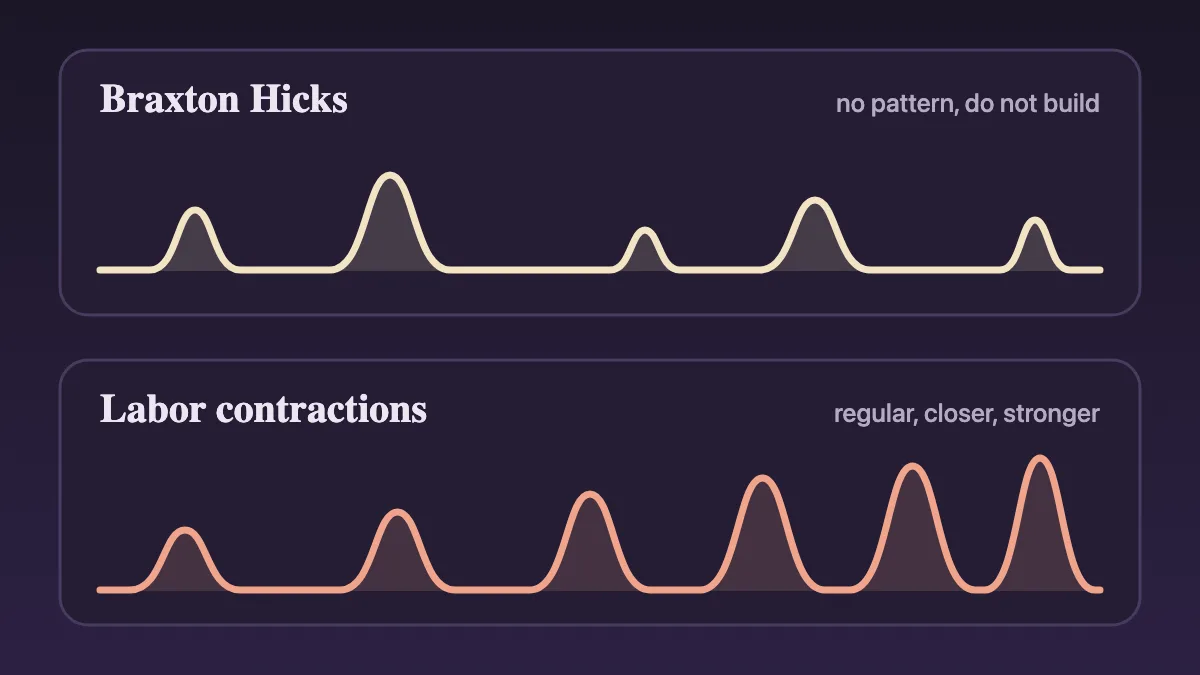
Braxton Hicks or labor contractions?
Five questions the main sources use to tell them apart, and the cases where a log cannot.
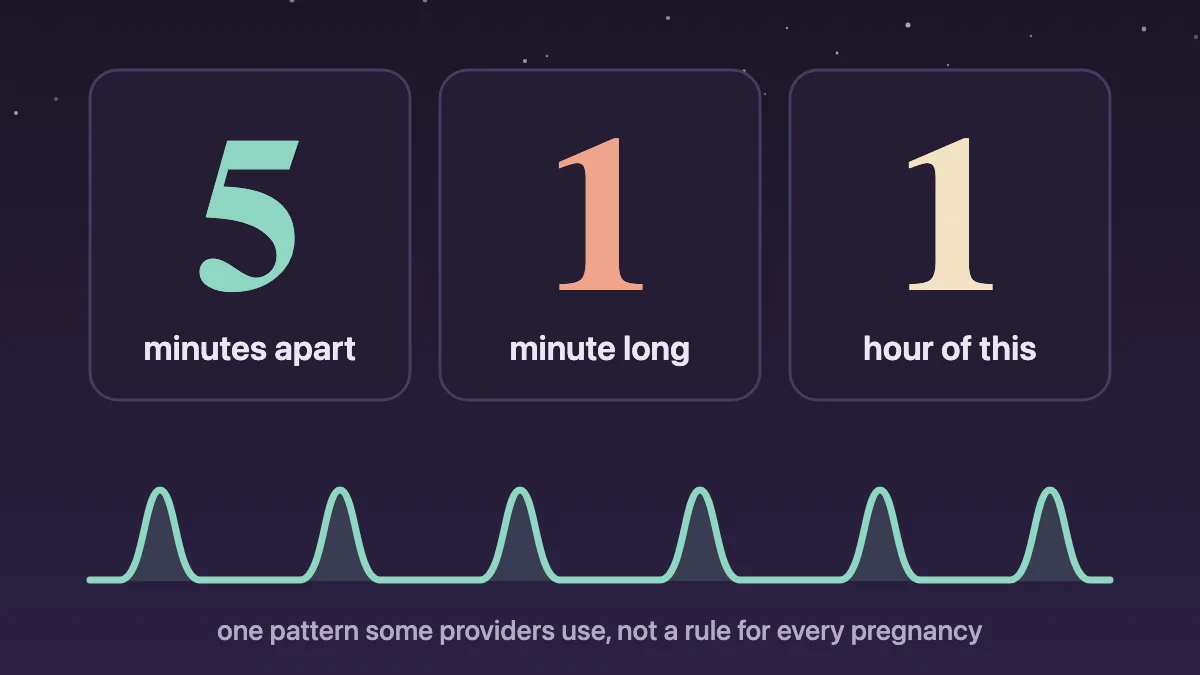
What the 5-1-1 pattern means, and its limits
Five minutes apart, one minute long, for one hour: what that is for, and what it leaves out.

A partner’s guide to timing contractions
How to keep the log so the person in labor does not have to, and what else to have ready.

Early labor at home, in the words of the sources
How long it lasts, what helps, and what each source says should prompt a call.