What the 5-1-1 pattern means, and its limits
Five minutes apart, one minute long, for one hour. It is the best-known shorthand in labor timing, and it is useful as long as you know what it leaves out.
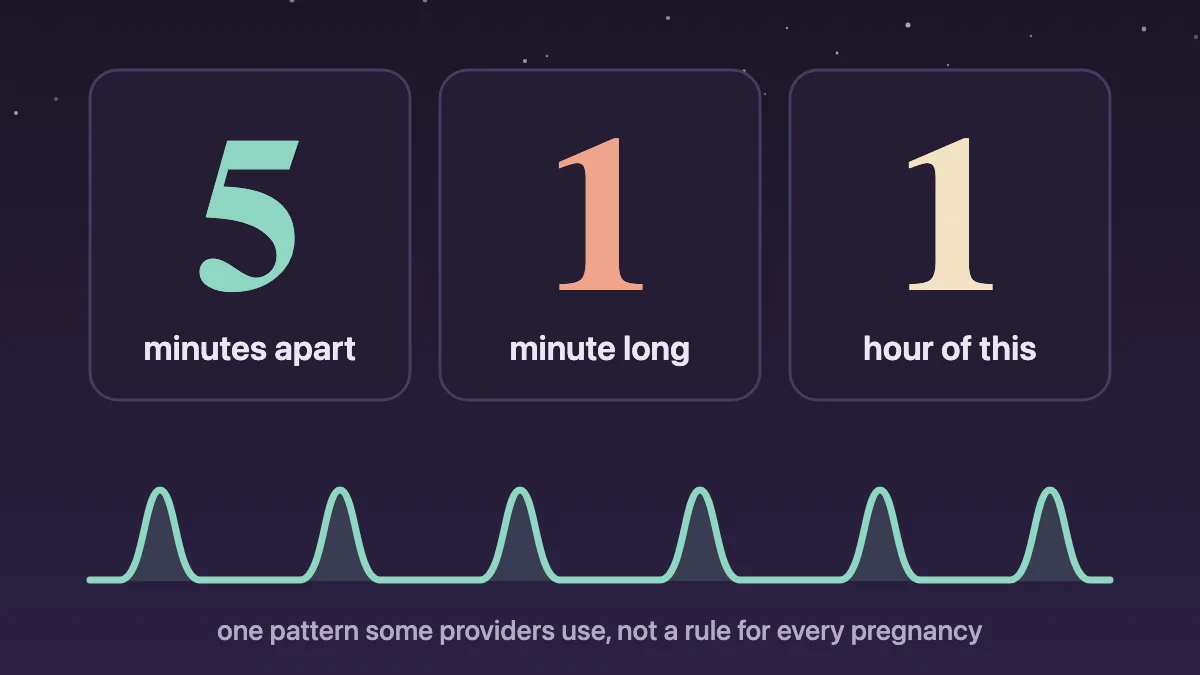
If you have read anything about timing contractions you have met 5-1-1. It is easy to remember at three in the morning, which is its whole purpose. It is also often repeated as if it were a medical rule that applies to everybody. It is not, and the sources that use it say so themselves.
What 5-1-1 stands for
Cleveland Clinic sets it out in an article on labor and delivery. Most healthcare providers, it says, will advise you to be checked when:
- 5: your contractions are five minutes apart,
- 1: they last one minute each,
- 1: and this has gone on for about an hour.
Two details matter. The wording is about being checked, not about being in labor. And the same article goes straight on to say that your healthcare team may have other instructions and that you should talk with your provider about the timing that is right for you.
How to read it from a log
On the contraction timer, the three tiles under the button line up with the three parts of the pattern:
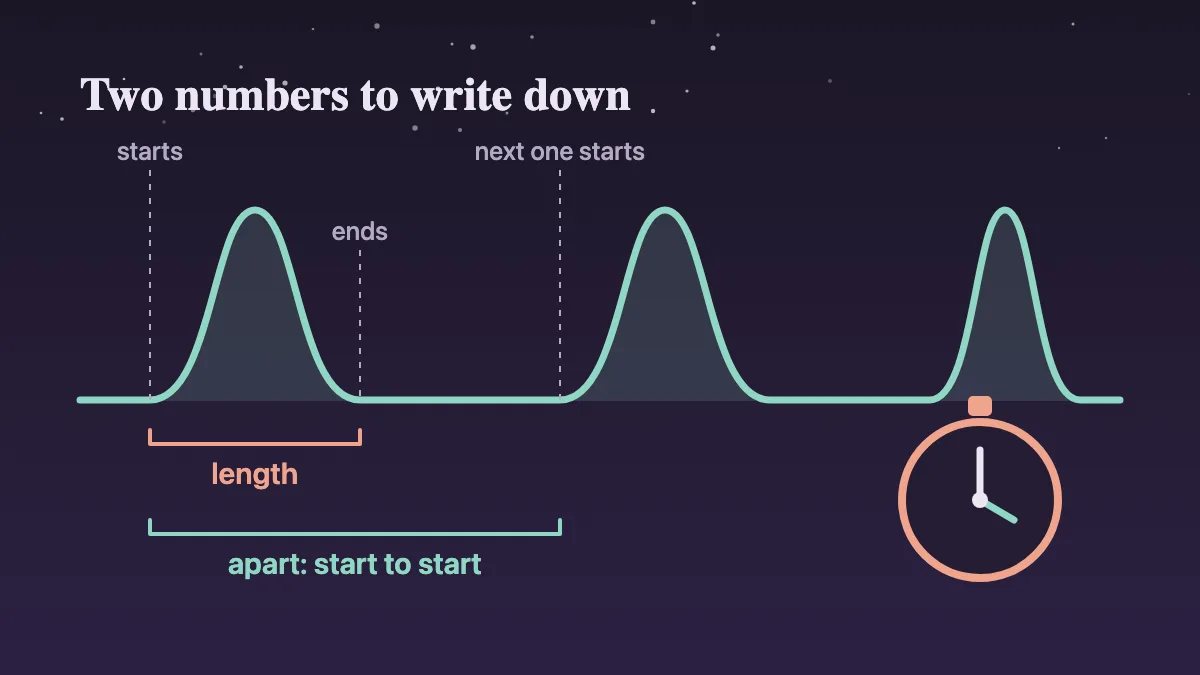
- Average apart is the first number. It is measured from the start of one contraction to the start of the next, so “five minutes apart” reads as 5:00. A smaller figure means closer together.
- Average length is the second. One minute reads as 1:00.
- In the last hour covers the third. The averages only use contractions that started in the past 60 minutes. Contractions five minutes apart for an hour come to about twelve of them.
The timer shows these numbers and leaves the comparison to you and your provider. It does not flash, beep or announce that a pattern has been reached, because a pattern on a screen is not a decision. If the start-to-start idea is new to you, how to time contractions has a worked example.
How other sources word it
Not every organization uses the 5-1-1 label, and the numbers shift a little from page to page:
- The NHS tells people in the UK to call their midwife or maternity unit if they are having regular contractions every five minutes or more often, or simply if they think they are in labor.
- Cleveland Clinic’s page on contractions says providers have different criteria, and gives a general figure of contractions lasting about 60 seconds and coming every three to five minutes.
- Cleveland Clinic’s page on the stages of labor says to call your provider or the hospital labor floor once contractions have been every five minutes for at least an hour.
- Mayo Clinic gives no number at all for leaving home. It says to talk to your healthcare professional about when to leave for the hospital or birthing center.
- ACOG’s patient page on when labor begins does not give a minutes-apart threshold either. It says to call if you think you are in labor or are not sure, and to agree ahead of time on the right moment to call.
Read together, these say that 5-1-1 is a common starting point for a conversation, not a standard that every provider follows.
Five limits worth knowing
1. Meeting the pattern does not mean you are in labor
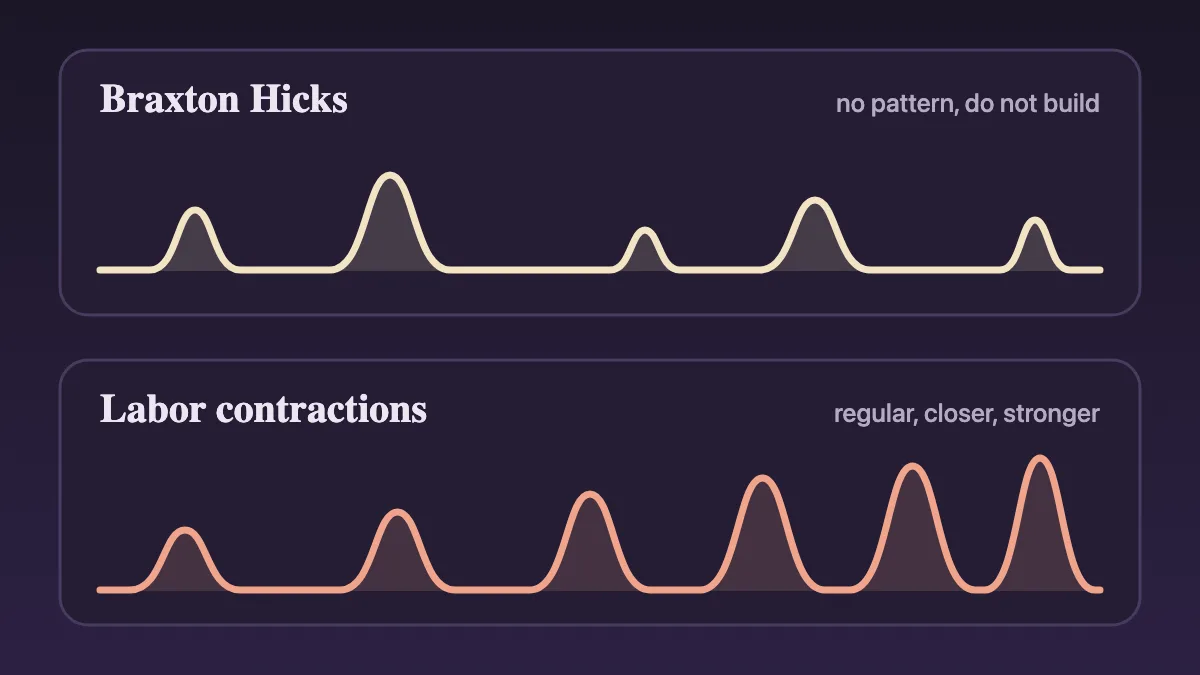
The Cleveland Clinic article is frank about this: even if you meet the pattern, an exam of your cervix may show no progress, and the team may tell you to go home and keep laboring for a while. Its page on prodromal labor describes false labor contractions that can come every five minutes and last a minute each without the cervix opening. The pattern earns you a check. The check decides.
2. Some signs do not wait for any pattern
ACOG lists four reasons to go to the hospital that have nothing to do with timing: your water has broken and you are not having contractions, you are bleeding heavily from the vagina, you have constant, severe pain with no relief between contractions, or you notice the baby moving less often. The NHS’s urgent list adds contractions that last longer than two minutes and six or more contractions in ten minutes. Neither would show up as 5-1-1.
3. Before 37 weeks it does not apply
The pattern is meant for labor at term. March of Dimes says that before 37 weeks, regular or frequent contractions, painful or not, are a reason to call your provider right away. Mayo Clinic and the NHS say the same about any sign of labor that early.
4. Your provider may have given you different numbers
Cleveland Clinic says to contact your provider immediately, alongside regular painful contractions, if you have a planned C-section or a medical condition that needs careful monitoring during delivery. ACOG asks you to think about how far you live from the hospital and what traffic could do to the trip. A second or third labor may also move faster: ACOG gives a typical length of 12 to 18 hours for a first baby and 8 to 10 hours for women who have given birth before. Any of these can change the instruction you are given.
5. An average can hide the detail
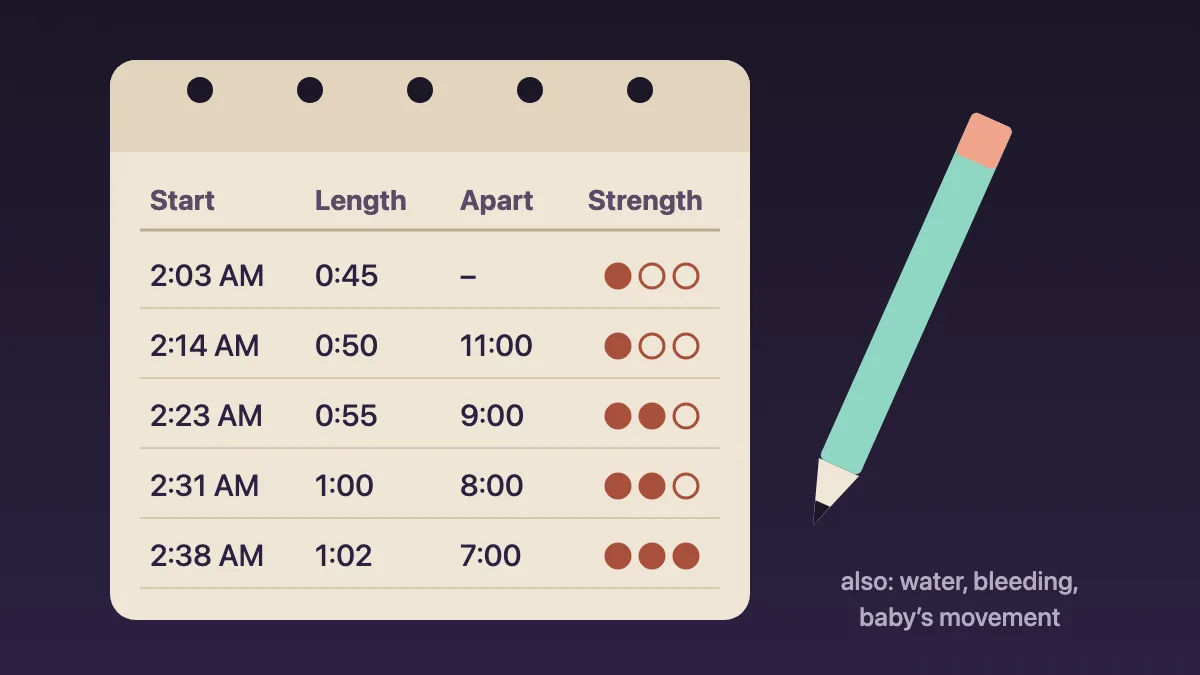
An hour that averages 5:00 apart could be a steady run of five-minute gaps, or a mix of three-minute and eight-minute gaps. Those are different pictures. Read the rows as well as the averages, and when you call, be ready to describe the last few contractions rather than a single number. What to note down for your provider covers what they are likely to ask.
What to do with it
The most useful thing you can do with 5-1-1 happens weeks before labor. At a prenatal visit, ask the question directly: what pattern do you want me to call at, and what should make me call sooner? Cleveland Clinic suggests questions along these lines, including how far apart contractions should be and when you should go to the hospital. Write the answer where you and your partner will both find it at night.
Then, when contractions start, the log is there to check against the instruction you were actually given, not against a number from the internet, this page included.
This page reports what the linked sources say about one common pattern. It is not an instruction to stay home or to leave. Follow the instructions your own provider gave you, and call your provider or emergency services if you are worried.
Sources
- Cleveland Clinic Health Essentials. Baby on the Way? Here’s What You May Not Know About Labor and Delivery (June 6, 2024). Opened November 21, 2026.
- NHS. Signs that labour has begun (page last reviewed 9 November 2023). Opened November 21, 2026.
- Cleveland Clinic. Contractions (last updated August 8, 2024). Opened November 21, 2026.
- Cleveland Clinic. Stages of Labor (last updated April 23, 2025). Opened November 21, 2026.
- Mayo Clinic. Stages of labor and birth: Baby, it’s time! (July 23, 2024). Opened November 21, 2026.
- ACOG (American College of Obstetricians and Gynecologists). How to Tell When Labor Begins (last reviewed November 2025). Opened November 21, 2026.
- Cleveland Clinic. Prodromal Labor (last updated February 6, 2026). Opened November 21, 2026.
- March of Dimes. Signs and symptoms of preterm labor (last reviewed December 2020). Opened November 21, 2026.
- Mayo Clinic. Signs of labor: Know what to expect (July 23, 2024). Opened November 21, 2026.
Read next
How to time contractions
The two numbers to write down, a worked example, and the mistakes that skew a log.
Braxton Hicks or labor contractions?
Five questions the main sources use to tell them apart, and the cases where a log cannot.
What to note down for your provider
The details a labor line usually asks for, and a short script to read from when you call.

A partner’s guide to timing contractions
How to keep the log so the person in labor does not have to, and what else to have ready.

Early labor at home, in the words of the sources
How long it lasts, what helps, and what each source says should prompt a call.